EPDM Versus TPO: Which Flat Roof Fits?

A low-slope roof can look simple from the ground, but the material decision is not. When comparing EPDM versus TPO, Berkshire property owners are really weighing how a roofing system will handle snow loads, freeze-thaw cycles, summer heat, drainage, foot traffic, and decades of local weather. Both are proven single-ply membranes. The better choice depends on the building, the existing roof assembly, and the details underneath the membrane.
For a home addition, porch roof, commercial building, condominium, or hospitality property, the goal should not be to select a material by price alone. A properly specified and professionally installed roof system protects the structure, controls water, and gives the owner a clear plan for long-term maintenance.
EPDM versus TPO: the basic difference
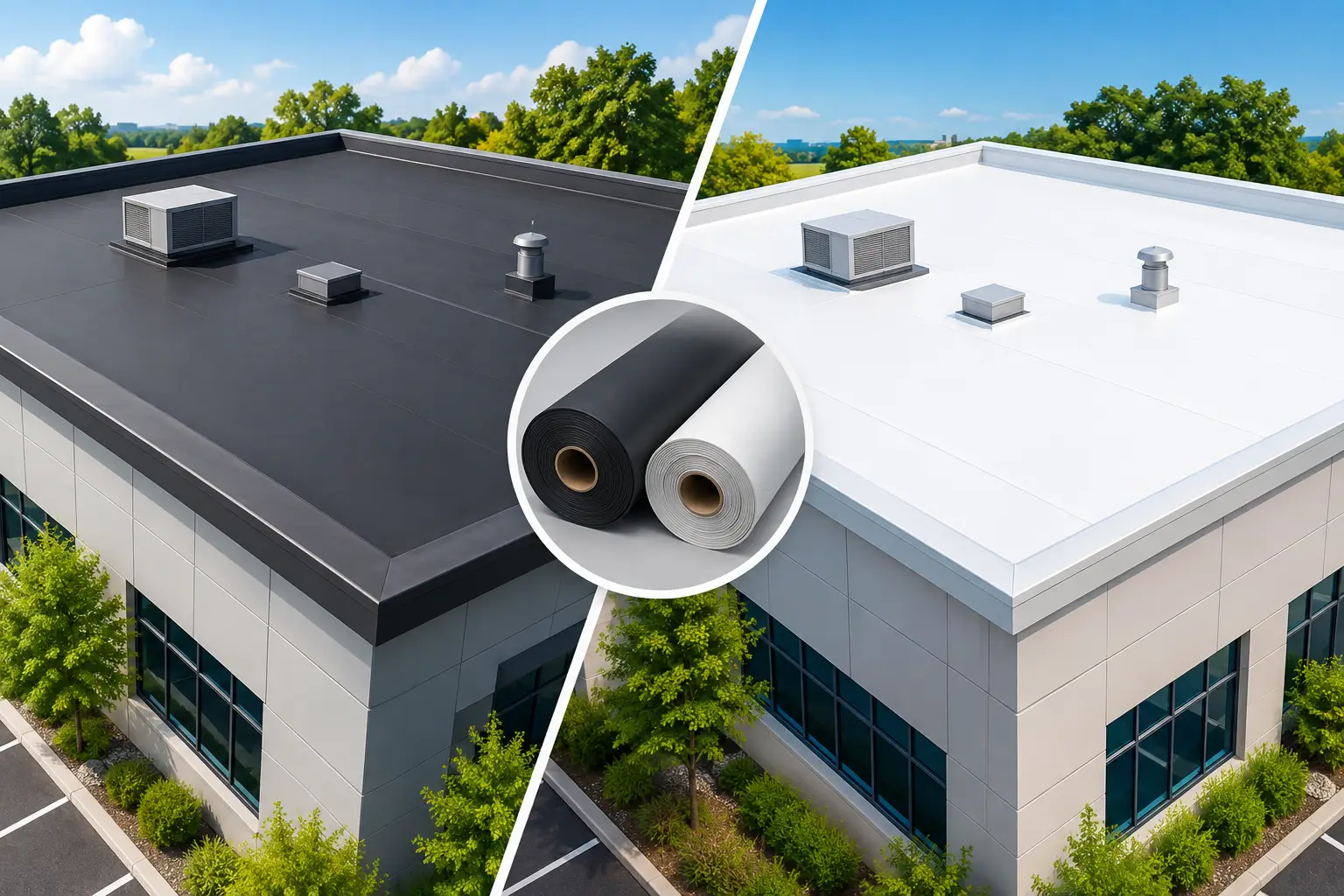
EPDM is a synthetic rubber roofing membrane, most often recognized by its black surface. It has been used on low-slope roofs for many years and has a strong track record when installed with compatible adhesives, flashings, and seam treatment. EPDM is flexible, durable, and particularly well suited to roofs with complex penetrations or movement at the deck.
TPO, short for thermoplastic polyolefin, is generally available in white, though other colors are possible. Its seams are heat-welded rather than adhered with seam tape. The bright white surface reflects a significant amount of sunlight, which can reduce rooftop temperatures and may help lower cooling demand in some buildings.
Neither membrane is automatically the right answer. The roof's slope, insulation, drainage, exposure, rooftop equipment, and intended use all affect the recommendation.
Weather performance in the Berkshires
Massachusetts roofs see more than one kind of punishment. Winter brings snow and ice, spring introduces repeated wet-dry cycles, and summer heat can be surprisingly intense on an exposed roof. In the Berkshire region, wind-driven rain and shaded roof areas also make drainage and flashing details especially important.
EPDM performs well through temperature swings because rubber remains flexible in cold conditions. This flexibility is valuable at transitions, around curbs, and where a roof deck may experience minor movement. Black EPDM absorbs heat, which can help shed snow in certain conditions, but it also makes the membrane hotter in direct sun. That heat is not necessarily a problem when the system is designed correctly, but it is a factor in building comfort and energy planning.
TPO's white surface reflects sunlight and can keep the roof surface cooler on hot, sunny days. On a building with air-conditioned spaces below, that may be a meaningful advantage. However, reflectivity alone should not decide the project. A white membrane will show dirt more readily, and a shaded roof can develop surface staining or biological growth regardless of the membrane selected. Regular inspection and drainage maintenance remain part of responsible ownership.
Snow does not make one membrane universally better than the other. Proper structural design, positive drainage, securely detailed edges, and well-designed penetrations matter far more than a simple black-versus-white comparison.
Seams, flashings, and the workmanship question
A low-slope roof is only as dependable as its seams and details. Field membrane is important, but leaks commonly begin at drains, parapet walls, skylights, HVAC curbs, pipes, transitions, and roof edges.
EPDM seams are typically completed with manufacturer-approved seam tape and primers. Modern EPDM seam systems can provide excellent performance when the substrate is properly prepared and the installer follows the required process. The membrane's flexibility also makes it a practical option for irregular shapes and detailed conditions.
TPO seams are welded with hot air, creating a fused connection between membrane sheets. A trained installer adjusts heat, speed, and pressure to the material and weather conditions, then tests the welds as work progresses. This method can produce very strong seams, but the equipment and installer experience matter. An inconsistent weld is not a minor cosmetic issue. It can become a water-entry point.
This is why material selection should be paired with installation expertise. Factory training, adherence to manufacturer specifications, and careful quality control are not sales language. They are central to whether a roof performs as designed. Berkshire Roofing Co. approaches low-slope projects as complete systems, not simply rolls of membrane installed across a deck.
Installation methods and what they mean
Both EPDM and TPO can be installed in several ways. The appropriate method depends on the deck type, building conditions, wind exposure, insulation design, and manufacturer requirements.
A fully adhered system bonds the membrane to the substrate. It creates a clean appearance and can work well on many commercial and residential low-slope applications. It requires a properly prepared surface and careful adhesive application.
Mechanically attached systems use fasteners and plates to secure the membrane, generally at designated locations beneath overlapping sheets. They can be efficient for larger roof areas, though attachment patterns must meet wind-load requirements and the finished roof may show subtle rows of fasteners.
Ballasted systems, where stone holds the membrane in place, remain an option in limited situations but are less common for many replacement projects. They add substantial weight and can make future leak investigation more difficult. For most owners, the conversation is more likely to center on adhered or mechanically attached assemblies.
Insulation deserves equal attention. A roof replacement can be an opportunity to improve thermal performance, correct uneven surfaces, or create better drainage with tapered insulation. Installing a premium membrane over inadequate insulation or a poorly sloped deck does not solve standing-water problems.
Cost: look beyond the initial proposal
TPO and EPDM pricing varies with membrane thickness, insulation, deck repairs, edge metal, number of penetrations, removal of existing materials, access, and project size. It is possible for either system to be the lower-priced option on a particular job, so broad claims that one is always cheaper are not useful.
Instead, compare proposals on an equal basis. Confirm the membrane thickness, insulation type and thickness, attachment method, flashing approach, edge details, drain work, warranty options, and any required deck repairs. A proposal that leaves these items vague may appear attractive initially but can create costly change orders or performance concerns later.
Owners should also consider lifecycle value. A membrane with properly installed flashings and dependable drainage is generally a better investment than a less expensive roof that relies on shortcuts at the perimeter or penetrations. Scheduled inspections, clearing drains, and addressing punctures promptly can extend service life for either material.
When EPDM may be the better fit
EPDM is often a strong candidate when flexibility and a long-established performance history are priorities. It can be particularly practical for roofs with detailed geometry, numerous penetrations, or conditions where cold-weather flexibility is valuable. Black EPDM may also suit owners who are less concerned with a reflective roof surface or whose building does not have significant cooling demand.
It is not a material that should be selected casually, however. Seam preparation, adhesive compatibility, and flashing workmanship remain essential. A properly designed EPDM system should include a plan for drainage and protection at areas exposed to maintenance traffic.
When TPO may be the better fit
TPO may be an excellent choice for owners who want a reflective, light-colored surface and heat-welded seams. It is commonly used on commercial buildings and can be a smart fit where cooling loads, visible rooftop appearance, or a light-colored roofing assembly are part of the project goals.
TPO also needs disciplined installation. Weld quality, membrane compatibility, secure termination, and correct detailing around rooftop equipment determine whether its technical advantages are realized. It is especially important to choose an installer who understands the specified system rather than treating every white membrane as interchangeable.
Start with the roof, not the material name
The most useful first step is a site-specific roof evaluation. A qualified contractor should examine the existing membrane, insulation, deck condition, drainage paths, flashing failures, rooftop equipment, and signs of trapped moisture. That investigation may show that a repair is practical, or it may reveal that replacement is the sounder long-term decision.
EPDM and TPO are both capable roofing systems. The right choice comes from matching the membrane and installation method to the building, then completing every seam, drain, curb, and edge with care. For Berkshire property owners, that level of planning is what turns a low-slope roof from a recurring concern into a dependable part of the building.


Comments