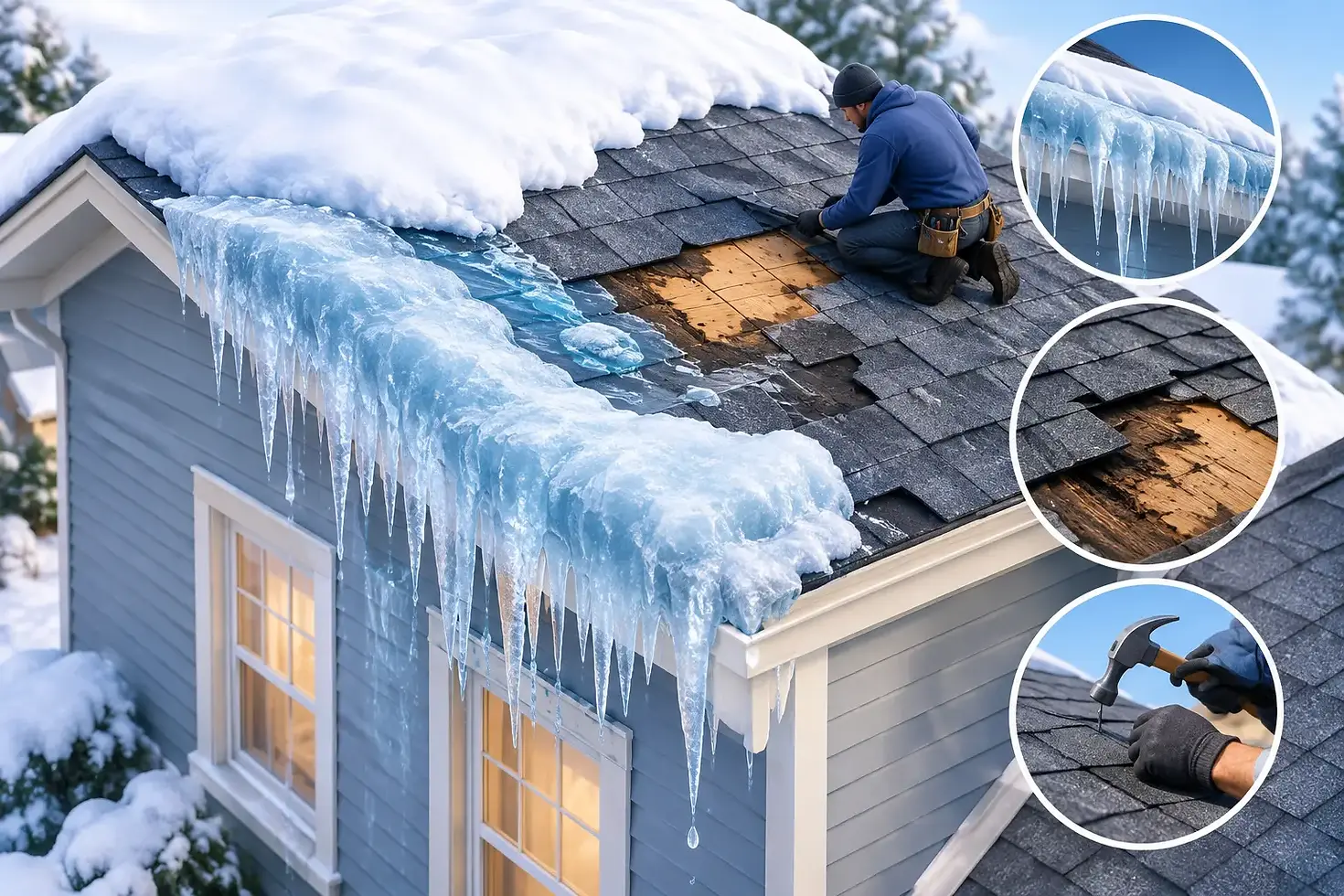
Ice Dam Roof Damage: Signs, Causes, and Repairs

A line of icicles along the eaves can look harmless after a Berkshire snowfall. But when ice builds at the roof edge while snow remains above it, water can back up beneath the roofing surface. Ice dam roof damage often begins out of sight, then shows up as a ceiling stain, peeling paint, wet insulation, or a leak in the middle of a winter storm.
For homeowners and property managers, the priority is not simply getting rid of visible ice. It is identifying why the roof is warming unevenly, limiting active water intrusion, and correcting any roofing details that allowed backed-up water to reach the building.
What Causes Ice Dam Roof Damage?
An ice dam forms when snow melts on a warmer section of the roof, flows down toward a colder eave, and refreezes. The ridge of ice that forms at the lower roof edge blocks later meltwater from draining. That water pools behind the dam and can work its way under shingles, flashings, or other roof components.
The usual driver is heat escaping from the building into the attic or roof deck. Gaps around recessed lights, attic hatches, plumbing stacks, ductwork, chimneys, and wall tops can let warm indoor air reach the attic. Inadequate or uneven insulation can make the problem worse. So can restricted attic ventilation, although ventilation alone will not solve an ice-dam problem caused by major air leaks or missing insulation.
Roof geometry also matters. Low-slope areas, valleys, dormers, skylights, roof-to-wall transitions, and long shaded eaves may hold snow and ice longer than open roof planes. Older homes often have a mix of attic conditions after additions or renovations, which can create warm and cold zones across the same roof.
A roof can be in good overall condition and still experience an ice dam during a severe winter. Repeated dams, interior leaks, or the same icy pattern in the same area each year are signs that the roof and attic system deserve a closer evaluation.
Warning Signs to Act On Early
A heavy ice buildup at the gutter line is the visible sign, but it is not the only one. Look inside as well as outside. Water stains at exterior walls, damp spots around window trim, bubbling paint, sagging drywall, and musty attic insulation can indicate that meltwater has already moved past the roof covering.
In the attic, frost on the underside of the roof deck, damp sheathing, or darkened wood can point to condensation and air leakage. These conditions may contribute to ice dams and can also affect the roof structure over time.
Icicles alone do not prove a roof leak. They often indicate that water is reaching the eaves, but their size depends on temperature swings, sun exposure, and gutter conditions. The greater concern is a thick ridge of ice trapping water above the eave, especially when paired with snow-covered roof sections and interior moisture.
Commercial and multifamily properties should pay particular attention to low-slope transitions, drains, scuppers, parapet areas, and locations where snow is pushed or drifts. A blocked drainage path on a flat or low-slope system can create a different but equally urgent water-management issue.
What to Do When an Ice Dam Is Already Leaking
Start by protecting the interior. Move furnishings and valuables away from the affected area, place containers under active drips, and document visible stains or damage. If a ceiling is bulging with water, avoid standing beneath it or attempting a risky repair from a ladder. A water-loaded ceiling can fail without much warning.
From the ground, a roof rake can remove loose snow near the eaves and reduce the meltwater feeding the dam. Use a tool designed for roofing and work carefully so it does not catch on shingles, flashings, or gutters. Do not climb onto an icy roof, chop at the dam with an axe or shovel, or use high-pressure washing equipment. Those approaches can break shingles, damage metal panels, bend gutters, and create a serious fall hazard.
Temporary melting methods are sometimes used by trained professionals, including low-pressure steam. The right method depends on the roofing material, roof pitch, amount of ice, and whether water has already entered the building. Throwing rock salt onto a roof is not a sound repair strategy. It can damage roofing materials, stain exterior finishes, harm landscaping, and leave the underlying cause untouched.
If a leak is active, prompt professional attention matters. Water can wet insulation, deteriorate drywall, stain finishes, and encourage hidden mold growth. A roofing inspection can determine whether the immediate issue is limited to ice backup or whether shingles, underlayment, flashing, gutters, or roof decking have been damaged.
Repairing Ice Dam Roof Damage the Right Way
The repair scope should follow the evidence, not a one-size-fits-all package. Minor events may require drying the affected area, replacing a small section of insulation, and repairing interior finishes after the roof has dried. More serious cases can involve replacement of damaged shingles, underlayment, flashings, roof decking, or compromised insulation.
Roofers should also look beyond the leak location. Water can travel along roof decking, rafters, framing, or insulation before it appears on a ceiling. Repairing only the visible stain without examining the roof assembly can leave wet materials in place and allow the problem to return next winter.
When roof replacement is appropriate, ice and water protection at vulnerable eaves, valleys, and transitions is a critical part of the assembly. Properly integrated underlayment and flashing provide secondary protection when wind-driven rain or backed-up meltwater reaches the roof covering. They do not replace good attic air sealing and insulation, but they add valuable resilience in a climate with snow, freeze-thaw cycles, and prolonged cold.
Material selection can influence how a roof manages snow, but no material eliminates the need for sound design. Asphalt shingles installed with the correct underlayment and ventilation details can perform well. Standing seam metal roofing sheds snow efficiently on many roof designs, yet snow can release suddenly and ice may still form at eaves, valleys, penetrations, or changes in roof plane. Where snow retention is needed, it should be planned as part of the roof system rather than added without considering panel type, roof pitch, and structural attachment.
Preventing Future Ice Dams Starts Below the Roof
The most durable prevention plan begins in the attic or roof cavity. The goal is to keep the roof deck as close as practical to the outdoor temperature while keeping conditioned air inside the building. That typically means sealing air leaks first, then improving insulation coverage and ensuring ventilation pathways are clear where the roof design calls for them.
Common improvements include sealing the attic hatch, closing gaps around wiring and plumbing penetrations, insulating ducts that run through unconditioned spaces, and correcting compressed or missing insulation. Baffles may be needed at the eaves to preserve airflow from soffit vents above the insulation. Homes with cathedral ceilings, finished attics, complex additions, or limited access need a more tailored assessment because the available solutions may differ from a conventional open attic.
Gutters deserve attention, but they are rarely the root cause of an ice dam. Clean, securely pitched gutters and properly placed downspouts help manage liquid water during milder weather. In winter, however, a gutter can freeze even when it is clear. Heated cables may be useful in specific trouble spots, but they should be selected and installed carefully. They can add operating cost, and they will not correct heat loss from the building.
Before the next winter season, have the roof inspected for worn shingles, open flashing joints, loose fasteners, deteriorated sealants, and vulnerable transitions. This is especially worthwhile after a major storm or when a roof has reached the later years of its expected service life. Berkshire Roofing Co LLC can evaluate the roof assembly and explain which repairs, insulation-related improvements, or replacement details make sense for the property.
A dry roof in January is not luck. It is the result of a roof system that sheds water, a building that controls heat loss, and early attention when small warning signs appear. If ice returns to the same eave each winter, treat that pattern as useful information before the next freeze turns it into an interior repair.


Comments